
What are Plasmalogens?
Plasmalogens are a type of phospholipid present in almost all tissues of human, and are most abundant in the brain. They are essential for their critical roles in memory, focus and cognitive functions. Plasmalogen levels inthe body begins to increase from foetal stage and reach its peak by the 30s and start to decline thereafter. Research have indicated that this decline affects brain performance especially in plasmalogen-deficient seniors.
How are Plasmalogens Formed?

Plasmalogens are synthesized in peroxisomes (organelles). Peroxisomal function decreases with age and which in turn leads to decreased synthesis of plasmalogens.
Our brain is the organ that contains the highest amount of plasmalogens and they are a key component of neuronal membranes and myelin sheaths. Therefore, reduced plasmalogens in the brain have been shown to manifest in various neurodegenerative disorders including Alzheimer’s disease.
Structure of Plasmalogen
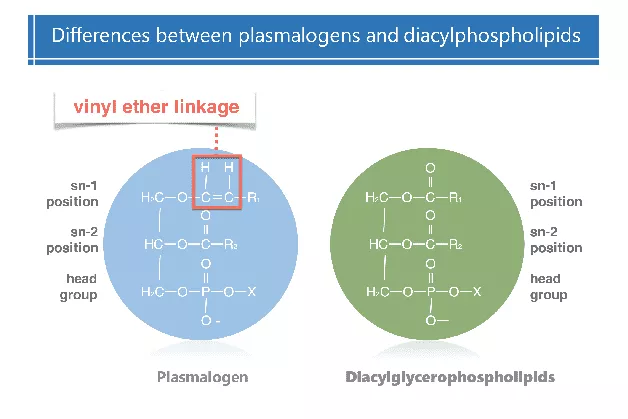
Plasmalogen is a type of phospholipid with glycerophospholipid as the parent compound.
Plasmalogen contains a fatty alcohol with a vinyl-ether bond (combination of an alkene and an ether) located at the sn-1 position and fatty acids, such as docosahexaenoic acid (DHA, omega-3) or arachidonic acid (AA, omega-6) located at the sn-2 position of the glycerol backbone. At the sn-3 position, the carbon links to an ethanolamine (ethanolamine plasmalogen) or a choline (choline plasmalogen) by means of a phosphate ester bond.
Plasmalogens contain various kinds of unsaturated fatty acids and function differently depending on the kind of unsaturated fatty acids contained. Especially, plasmalogens, enriched in DHA*, are reported to be effective to brain function such as memory.
*DHA (Docosahexaenoic Acid): an omega-3 polyunsaturated fatty acid, an essential fatty acid that cannot be synthesized in the body and therefore must be obtained from food .
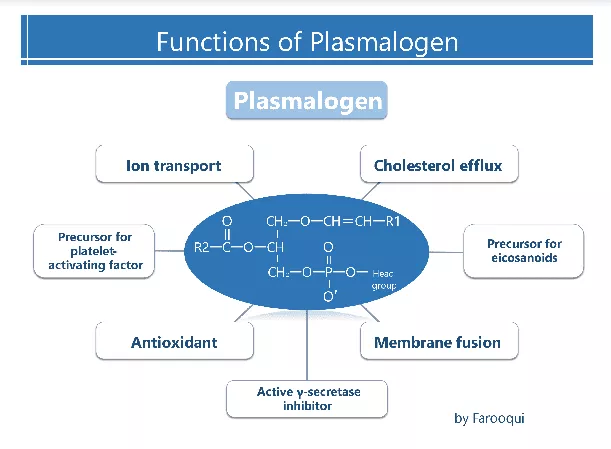
This slide outlines the activities of Pls, among which their antioxidative activity is the most-well known. Pls also play a role in ion transport, with cholesterol efflux capacity, and function as an eicosanoid precursor — Eicosanoids are hormone-like substances, including the prostaglandins. Pls are known to function as a precursor to them or a platelet-activating factor. In short, they are crucial for life in all respects.
DHA - rich Food
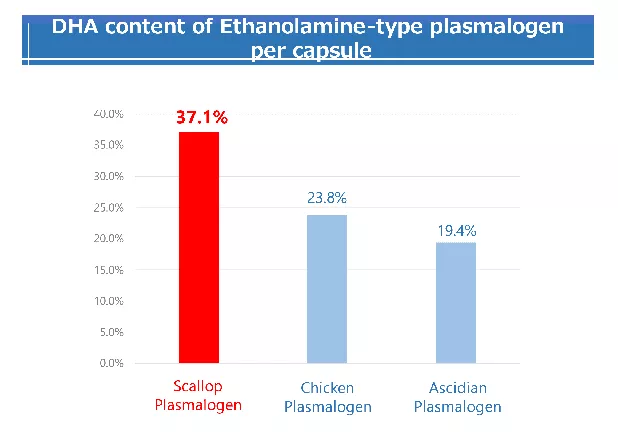
Three capsules each were randomly drawn from commercially available plasmalogen supplements derived from scallops, chicken and ascidians, and then the fatty acids of ethanolamine plasmalogens (pl-PE), abundant in the brain, were measured by LC-MS/MS after lipid extraction.
As shown in the chart, scallop-derived plasmalogens contain the highest amount of DHA. Three capsules each were randomly drawn from commercially available plasmalogen supplements derived from scallops, chicken and ascidians, and then the fatty acids of ethanolamine plasmalogens (pl-PE), abundant in the brain, were measured by LC-MS/MS after lipid extraction. As shown in the chart, scallop-derived plasmalogens contain the highest amount of DHA.
Plasmalogens play an essential role neuron cells— providing unique structural attributes, facilitating signaling processes and protecting lipid membrane from oxidation reaction by free radicals. It has been reported that reduction of level of plasmalogen is correlated with cognition deficit, oxidative stress, and severity of diseases.
Studies showed positive therapeutic outcomes with plasmalogen interventions in Alzheimer Disease (AD) patients. Furthermore, the severity of AD is improved when circulated level of DHA and plasmalogen were high. This suggests that plasmalogen may act asradical scavenger to protect cells from oxidative damages and reducing inflammatory in neurons.